How collective procurement is reinvesting into Queensland
Published on 27 November 2026
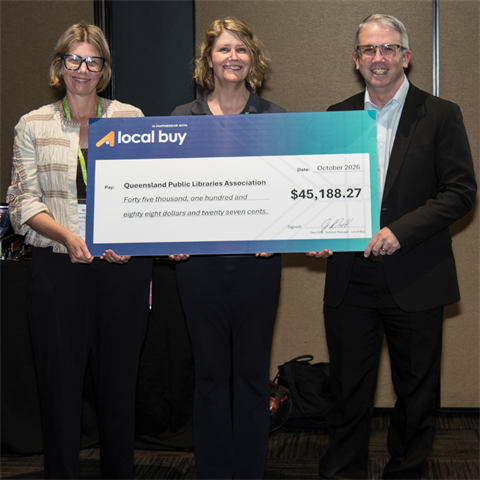
Beyond the purchase: Collective procurement for Queensland libraries
Feature article by Colleen Bentzen, Manager, President of the Queensland Public Libraries Association
Key takeaways
- Every library purchase is an opportunity to deliver greater value for communities.
- There is a clear pathway to achieve savings collectively and reinvest into QPLA and the wider library sector.
- Investment builds capability and a stronger library service for the future.
I have worked in library acquisitions for around three and a half years, and during that time I have gained a much greater appreciation of the challenges libraries face when purchasing materials for increasingly diverse collections.
Within my library service, purchasing by corporate credit card is available, but it is intended to be used as a last resort. Wherever possible, purchases are made through established procurement Arrangements to support council’s procurement practices, maintain transparency of expenditure and strengthen organisational compliance.
Appropriate procurement processes are about more than financial accountability. Purchasing from unapproved online suppliers can expose an organisation to a range of additional risks that may be difficult for individual staff members to assess. These can include:
- concerns about supply-chain practices, such as modern slavery and child labour,
- cybersecurity and payment fraud,
- the protection of personal and organisational information,
- product authenticity and quality,
- warranty and return arrangements, and
- the ongoing reliability of the supplier.
Online marketplaces can also make it more difficult to establish whether a supplier has been appropriately vetted, whether expenditure represents value for money, and whether purchasing practices meet organisational requirements for transparency, recordkeeping and responsible procurement. While an individual online purchase may appear straightforward, collectively these issues can create financial, operational, compliance and reputational risks for the organisation.
For traditional library materials, procurement is relatively straightforward. There are many established suppliers of physical and digital books, making it comparatively easy for libraries to purchase through approved channels. The challenge becomes much greater when libraries move beyond traditional collections.
Today’s public library collections can include an extraordinary variety of items: tools, musical instruments and equipment, recreation and outdoor equipment, craft and hobby materials, toys, board games, jigsaws, STEM equipment and much more. Even relatively mainstream items such as PlayStation 5, Xbox and Nintendo Switch games can be difficult to source through established procurement Arrangements.
This reflects the changing role of public libraries. Our collections are becoming broader and more responsive to the interests, learning needs and recreational activities of our communities, but procurement options have not always evolved at the same pace.
Having a broader range of suitable pre-qualified suppliers available through established procurement Arrangements, such as Local Buy, makes a significant difference. It gives libraries greater flexibility to develop contemporary collections while supporting their organisations to meet procurement and compliance obligations. Importantly, it would also reduce the burden on individual library staff, who can otherwise find themselves navigating a complex landscape of online suppliers while trying to balance customer demand, value for money, organisational policy and responsible procurement.
What QPLA is demonstrating in collaboration with Local Buy is that every procurement decision has the potential to create value beyond the purchase itself.
For more information on the Libraries Arrangement, please contact Category Manager Anne-Maree Hapgood at ahapgood@localbuy.net.au.