Shining a light on the regions: When the next disaster hits
Published on 27 November 2026
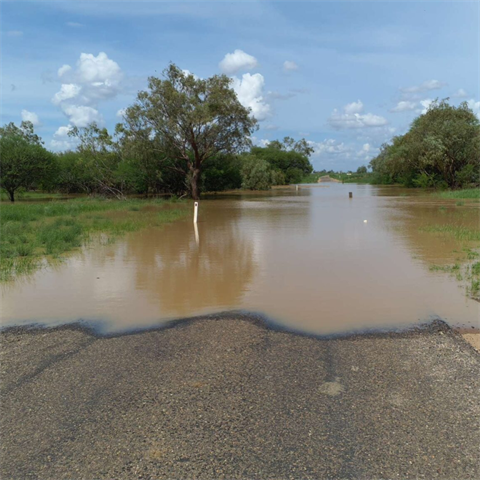
Queensland doesn't get to choose when disaster arrives
Article by Shez Mussa, Manager of Business Development
Key takeaways
- Disaster readiness underpins everything: the immediate response, the aftermath and long-term recovery.
- Recovery speed is decided before disaster strikes. Built with QRA and LGAQ, Local Buy's Disaster Management and Recovery Arrangement gives councils pre-qualified suppliers and compliance-ready pathways ahead of the wet season.
- The Local Government Association of Queensland's 374-page submission successfully called on the federal government to abandon the proposed DRFA changes and retain the current funding model.
Most Queenslanders don't need reminding of what the 2025-26 wet season delivered. Ex-Tropical Cyclone Koji crossed the North Queensland coast in January, followed two months later by Ex-Tropical Cyclone Narelle. Between them and five months of monsoonal flooding that stretched from the Gulf to the coast, 74 of the state's 77 local government areas were disaster declared in the summer of 2025-26. Roads cut off, bridges flooded, and community infrastructure that had taken years to build, destroyed. Reconstruction costs from the prior year (summer 2024/25) alone exceeded $2.2 billion. The councils responsible for rebuilding those communities had to move fast in conditions where nothing was straightforward and every decision carried consequences.
Following the federal government's June announcement proposing changes to the DRFA funding model, the Local Government Association of Queensland (LGAQ) lodged a 374-page submission with the National Emergency Management Agency, calling on the federal government to abandon the proposed changes entirely. The message from Queensland's 77 councils was unified and unambiguous; the current DRFA works. They were successful in having their voices heard, and the federal government reinstated the 75% contribution funding model.
And here's where the procurement conversation becomes unavoidable.
When a disaster is declared and a council needs to move immediately )engaging contractors, mobilising plant and equipment, sourcing emergency materials, delivering program management) the decisions that determine how fast recovery can occur were made long before the event. The councils that recover quickly are rarely the ones that figured it out on the fly. They are the ones that had their pathways established, their suppliers confirmed and their compliance frameworks in place before the rain came.
That kind of readiness doesn't happen by accident. It requires knowing, in advance, which suppliers are pre-qualified and capable of operating in your area. It requires contract terms that are already agreed so there's no legal negotiation happening while roads are still underwater. It requires a procurement framework that your finance team, your CEO and your auditors can all stand behind when the pressure is at its highest and the decisions are being made in real time.
For councils across Queensland, Local Buy's Disaster Management and Recovery Arrangement provides exactly that. Developed with the Queensland Reconstruction Authority and LGAQ, it gives councils access to pre-qualified suppliers across counter disaster operations, emergency works, disaster management consultancy, program management and grant writing - with contract conditions already in place and a compliance pathway that holds up under the scrutiny that post-disaster funding acquittals always bring. Sitting behind it is a broader network of more than 5,200 pre-qualified suppliers across infrastructure, engineering, waste, plant hire, materials, ICT, and traffic management.
The framework is not the point. The outcome is. A council that has confirmed its procurement pathways before the season can focus its energy on the community when the event happens, rather than on the paperwork. In the middle of a disaster, that distinction matters enormously.
This is precisely why the time to prepare is now, not after the next event is declared.
For many Queensland councils, the next disaster is not a question of if. It is a question of when. The question worth sitting with today is whether the pathways are ready when it arrives.
Contact Local Buy at enquiry@localbuy.net.au to confirm your disaster procurement pathways ahead of the summer season.
This is part of an ongoing series shining a light on the regions Local Buy serves across Queensland.