Preparing council fleets for the electric future
Published on 16 September 2026
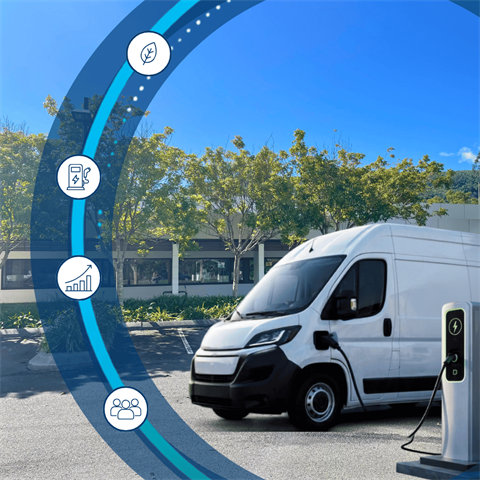
Getting council fleets ready for EV transition
Article by Shane Grimstone, Category Manager
Key takeaways
- The transition to fleet electrification starts with data - not every fleet asset is ready for electrification.
- Charging infrastructure will determine the success of a transition.
- A council’s business case must extend beyond fuel savings, into whole-of-life considerations.
Fleet Operations are critical to the effective delivery of council services. Councils rely on a diverse range of vehicles and equipment to meet essential community requirements such as waste collection, road maintenance, parks and gardens, construction projects, emergency response, community transport, and infrastructure delivery. A well-managed fleet ensures that quality service never stops.
As councils transition to low-emission vehicles and technologies, fleet operations play an increasingly important role in achieving sustainability and long-term service delivery objectives.
Why councils are considering fleet electrification
Fleet assets are often among a council's largest operational emissions sources.
As sustainability targets continue to evolve, many councils are investigating how fleet electrification can support:
- Emissions reduction commitments
- Lower fuel dependency and expenditure
- Reduced maintenance requirements Improved operator experience
- Community leadership outcomes
- Alignment with state and federal sustainability initiatives.
For many councils, fleet electrification also presents an opportunity to modernise ageing assets while improving visibility of fleet performance through integrated vehicle technologies.
However, a successful transition will be challenging and requires a clear understanding of operational realities rather than a simple ‘like-for-like’ replacement approach.
Understanding which vehicles can be electrified
Not every fleet asset is currently suited to electrification.
The first question councils should be asking is not “What EV should we buy?” but rather “Which fleet activities are suitable for electrification now?”
Many council fleets contain a mix of:
- Administrative passenger vehicles
- Pool vehicles
- Ranger vehicles
- Parks and open space vehicles
- Waste and recycling fleets
- Heavy construction equipment
- Plant and specialised machinery.
Some vehicle classes may already have mature EV alternatives available, while others remain limited by range requirements, payload constraints, or availability. Understanding vehicle utilisation patterns can help councils identify:
- Low-risk transition opportunities
- Assets nearing replacement
- Vehicles with predictable travel patterns
- High-utilisation fleets requiring further assessment.
- The councils achieving the strongest outcomes are typically those that make decisions based on operational data rather than assumptions.
Charging infrastructure is the critical enabler
The EV vehicle itself often receives the most attention, yet charging infrastructure has a greater impact on fleet success than the vehicle itself.
Questions councils should consider include:
- Where will vehicles be charged?
- Is overnight charging sufficient?
- Are depot electrical systems capable of supporting future demand?
- Should chargers be installed in stages or through a large-scale rollout?
- How will public charging networks supplement council operations?
- What level of redundancy is required?
There is, however, a ‘chicken and egg’ dilemma currently facing councils considering the transition to EVs. Councils don't necessarily want to buy EVs until charging infrastructure exists, but they may also be reluctant to invest in charging infrastructure before EVs are secured.
Infrastructure planning becomes particularly important when multiple operational areas share facilities or when councils operate across large geographic regions. A charging solution designed for ten vehicles today may need to support fifty within a few years.
Taking a long-term view can help councils avoid costly upgrades and disruption later.
Balancing sustainability with operational requirements
While environmental benefits often drive EV discussions, fleet decisions must remain grounded in-service delivery outcomes.
The goal should be to deliver genuine environmental benefits while continuing to meet the needs of the community.
Fleet managers should therefore assess:
- Vehicle range requirements
- Seasonal variations in usage
- Towing requirements
- Payload expectations
- Remote area operations
- Emergency response capabilities.
In Queensland, councils often face unique challenges associated with large geographic footprints, regional operations, and disaster response responsibilities.
The right electrification strategy will therefore differ between councils and should reflect local service delivery needs rather than seeking a single solution for every fleet category. There is also a strong argument for councils working together to develop a broad strategy that maximise benefits for communities, ratepayers and visitors.
Building the business case
The purchase price of an electric vehicle is only one component of the financial picture.
Councils are increasingly evaluating:
- Total cost of ownership
- Fuel savings
- Maintenance reductions
- Asset life expectations
- Residual values
- Infrastructure investment requirements
- Energy management opportunities.
A robust business case should balance financial analysis with sustainability outcomes, operational performance, and organisational readiness.
Importantly, some of the greatest value may come from avoided future costs and improved resilience rather than immediate savings alone.
Looking beyond council's own operations, the business case should also consider potential revenue opportunities from public charging infrastructure, including charging services for visitors and other EV users.
Preparing for what comes next
Fleet electrification is not simply a procurement activity.
It requires collaboration between fleet teams, asset managers, facilities teams, procurement professionals, finance specialists, and operational stakeholders.
As technology evolves, councils may also need to consider:
Fleet management software integration
- Smart charging capability
- Vehicle-to-grid opportunities
- Renewable energy integration
- Battery lifecycle management
- Future heavy vehicle electrification pathways.
The most successful organisations are unlikely to be those that move the fastest, but those that prepare thoroughly and make informed decisions based on evidence.
Electric vehicles are becoming an increasingly practical option for many council fleet applications. However, the transition extends well beyond vehicle replacement.
By understanding fleet usage patterns, planning charging infrastructure strategically and building a long-term roadmap for implementation, councils can position themselves to capture the benefits of fleet electrification while maintaining reliable community service delivery.
The opportunity is not simply to replace existing vehicles, but to rethink how fleet assets are deployed, managed, and supported in the future.
Local Buy can support those councils who are uncertain about how to manage an ageing fleet, improve fleet performance, and develop a roadmap to future-proof their fleet and fleet infrastructure (e.g. charging stations).
For councils beginning their fleet electrification journey, Local Buy has the following Arrangements available to support your procurement:
Together, these Arrangements can support councils in sourcing vehicles, planning infrastructure, analysing fleet requirements and developing long-term strategies for an increasingly electrified fleet environment.
The shift towards electric and low-emission fleets is no longer a question of if, but when and how. Councils that begin planning now will be better positioned to manage costs, minimise risk and deliver long-term value for their communities.
If your council is exploring fleet electrification, charging infrastructure, asset replacement strategies or broader fleet optimisation opportunities, Local Buy is here to help. Contact enquiry@localbuy.net.au to discuss how our procurement Arrangements and category expertise can support your journey.