Unlocking energy savings through aggregated procurement
Published on 15 October 2026
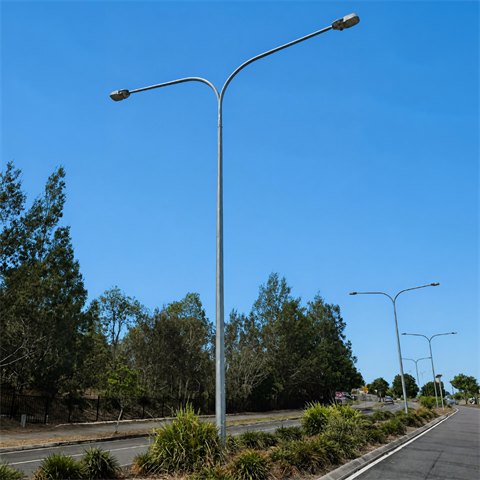
How aggregated energy procurement is delivering for Queensland communities
Article by Mike Fideli, Category Manager
Key takeaways
- Local Buy Arrangement LB333 has delivered more than $21.7M in contract savings to participating organisations
- Aggregation works – participants are saving on electricity cost for streetlights, large sites and small sites
- The Arrangement now extends beyond standard electricity to green energy needs, Power Purchase Agreements (PPAs) and gas – and it is open to new participants.
Why energy procurement requires a market-led approach
Did you know that energy prices are checked every five minutes in the Australian energy market (known as the five-minute settlement)? This system allows for real-time adjustments on pricing based on supply and demand, and functions as a live auction – one that happens every five minutes. Since October 2021, the National Electricity Market (NEM) has set electricity prices through five-minute auctions, with the price determined by the last generator needed to meet demand. The NEM will cycle from cheapest to most expensive generator, stacked on each other, to complete the demand auction.
Here’s an example of how it works: Demand this interval = 1,000 megawatts (MW).
| Generator |
Capacity |
Bid Price |
| Wind Farm A |
300 |
$10/MWh |
| Solar Farm B |
250 |
$20/MWh |
| Coal Station C |
350 |
$40/MWh |
| Gas Peaker D |
100 |
$80/MWh |
To meet demand, the market needs all four generators and because the gas peaker was the last generator on the cost scale to be used, the market price becomes $80/MWh.
Queensland participates in the NEM, and the consumer market is then controlled by the retailers purchasing electricity from this fluctuating market. The retailers manage their exposure to the ever-changing spot pricing through hedging and other contracting strategies before packaging energy, network and retail services for end customers.
For councils, this means energy retailers’ offerings reflect far more than a simple unit price – it also reflects the retailer's view of future market conditions, and the risk profile that they deem to the end customer's consumption.
Local Buy brings structure, scale and timing discipline to that process. Since the first aggregated tender in 2008, the model that started with just 8 Councils has now grown to 27 participating organisations. Participants retain control of their energy decisions, while benefiting from a coordinated market approach, specialist category oversight and a procurement pathway designed for Queensland local governments.
How Local Buy turns collective demand into negotiating leverage
Electricity is essential to almost every council service – from streetlighting and water treatment to libraries, aquatic centres, depots and administration facilities. Yet it is also one of the most technically complex and commercially volatile categories councils procure. The price paid by an organisation is shaped not only by how much electricity it uses, but also by when it uses it, the type and location of each site, network tariffs, regulated charges, environmental costs and the retailer’s approach to managing wholesale market risk.
That complexity is precisely why Local Buy established LB333 Retail Energy (Electricity and Gas) Arrangement, to simplify the process and achieve competitive market pricing.
To create clean, comparable pricing, participating demand is organised into three distinct site categories, each taken to market separately:
- Unmetered streetlights
- Metered large sites – sites consuming more than 100,000 kWh per year
- Metered small sites – sites consuming less than 100,000 kWh per year.
Local Buy consolidates consumption data, aligns contract requirements and conducts the quotation process with pre-qualified LB333 retailers. Aggregation gives bidders visibility of a substantial, diversified load and allows Local Buy to test pricing across defined contract terms and market windows. Competition is therefore focused on a common requirement, giving participants a clearer basis for comparison and a stronger platform for commercial negotiation than could be achieved if an organisation was to go to the market alone.
The value extends beyond the headline energy rate. Local Buy coordinates market engagement, supports evaluation and contract alignment, and can incorporate practical requirements such as consolidated monthly billing across council sites. Because LB333 is established under section 234 of the Local Government Regulation 2012, councils can also access a compliant procurement pathway without independently repeating a full tender process.
We are stronger, together
In the energy market, scale matters. Retailers invest significant time and resources in analysing consumption profiles, forecasting wholesale market exposure and pricing risks. A single council can certainly attract interest, but a coordinated portfolio of councils and community organisations represents a much larger and more attractive opportunity for the market.
The aggregated load provides retailers with greater certainty, a more diverse consumption profile and access to a larger volume of energy demand. In return, participants in LB333 are benefiting from stronger competitive tension, more robust pricing submissions and improved access to commercial solutions that may not be available through standalone procurement activities. By lowering the retailer’s overall risk, together, councils and other participating organisations can help manage energy costs for their community.
Importantly, the benefit doesn’t happen just for the largest participants in the Local Buy model. One of the greatest strengths is that it allows our regional, rural and First Nations councils to access the same market engagement and leverage as the larger local governments.
Stable retail contracts through to long-term renewable purchasing
LB333 has evolved as participant priorities and the energy market has changed. In addition to conventional electricity and gas supply, the Arrangement can support green energy products and Power Purchase Agreements (PPAs). A PPA is a longer-term contracting mechanism under which an organisation agrees to purchase electricity, or the financial and renewable attributes associated with electricity, from an energy generator or energy project on agreed terms. Depending on its structure, a PPA can improve long-term price stability, support renewable energy development and help an organisation progress emissions-reduction commitment.
PPAs are not a one-size-fits-all solution. Contract tenor, load shape, generation profile, volume commitments, settlement structure and certificate treatment all affect the risk and value of an offering. Local Buy helps participants consider these issues collectively, test market appetite and identify where aggregated demand may support a more competitive and bankable proposition. This becomes increasingly important as councils plan for fleet electrification, charging infrastructure and other energy-intensive services that will reshape future consumption.
Plan for your next milestone early
Energy procurement rewards preparation. Councils approaching a contract expiry, reviewing renewable options or seeking to benchmark current pricing should engage early so that consumption data can be validated, requirements can be aligned and contract end dates can be considered against upcoming aggregated quotation rounds. Early planning gives Local Buy and participating organisations more flexibility to choose an appropriate market window rather than being forced to act near expiry.
Local Buy has the following Arrangement available to support your energy procurement:
To discuss how LB333 could work for your organisation, contact Mike Fideli, Category Manager (Energy), at mfideli@localbuy.net.au or email enquiry@localbuy.net.au.